Selected Work
Products that started as something I needed.
Four of them, anyway. Each one began the same way — a gap I kept walking past until I couldn't anymore. None of these are case studies. They're explanations from the person who had a reason to build.

01
freddyhi.com · Audio-first wellbeing
FreddyHi
A quiet journal space for mental well-being. Not therapy. Not social media. Not another app trying to optimise your life.
There was a point where life became louder than I could handle. Not because one terrible thing happened — because a thousand small things did.
The pressure. The anxiety. The constant feeling that I should be doing more, becoming more, fixing more. Every app seemed designed to make me better. None of them simply let me be.
So I built the thing I couldn't find. A few minutes a day where nobody expects anything from you, where your thoughts can slow down, and you're allowed to arrive exactly as you are.
Some days you'll feel amazing. Some days you'll barely hold it together. Both are welcome.
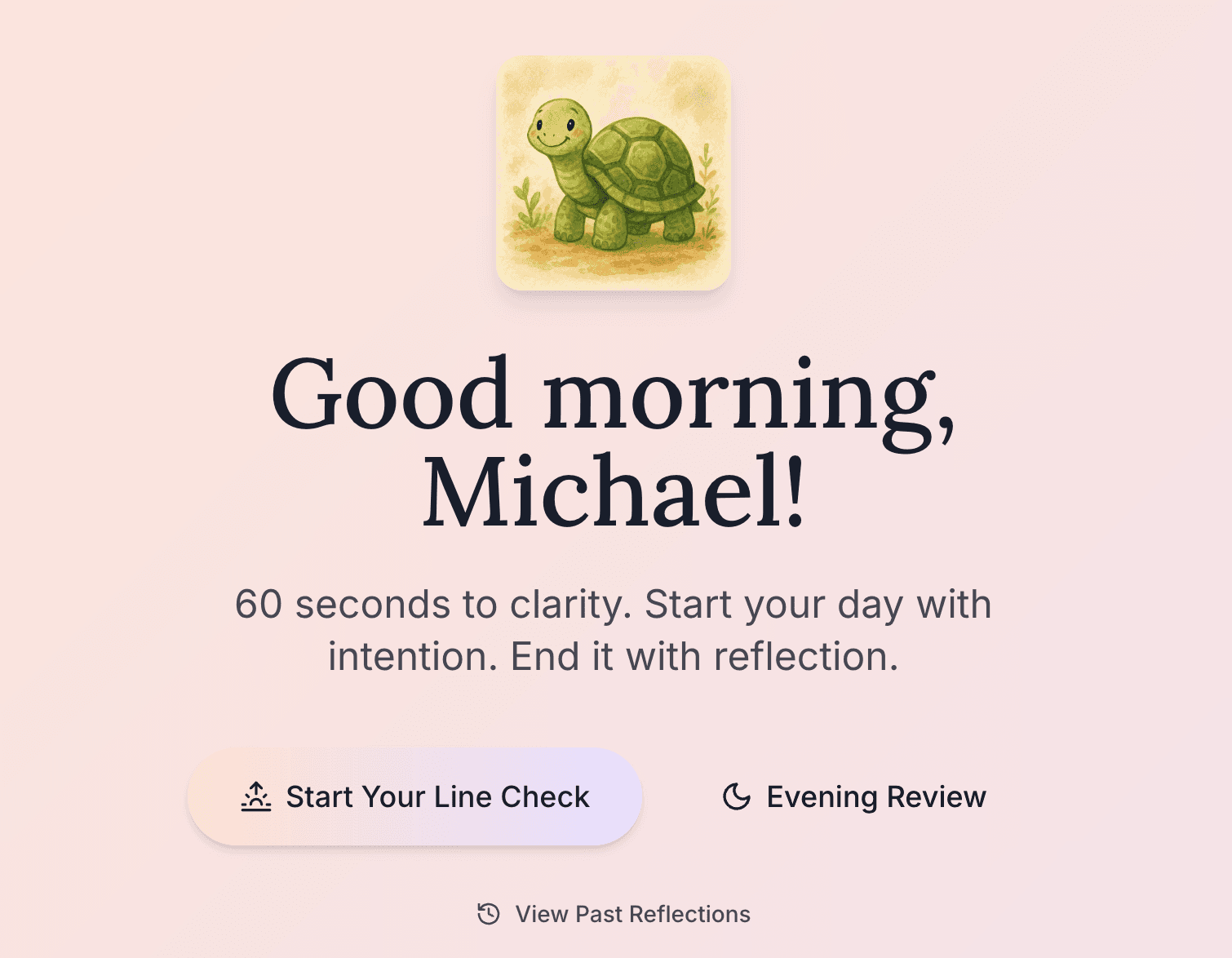
We spend our lives saying "Hi" to everyone else. FreddyHi is simply a reminder to say it to yourself.
02
rurlyok.com · Honest check-ins
rurlyok
The second question, built into a product. A place where "I'm fine" isn't the end of the conversation.
For a long time, I was really good at one thing: lying. Not maliciously — just the standard, socially acceptable version. "Absolutely fine, all good — how are you?" I could deliver that line through depression, anxiety, isolation, and a dependence on sleeping pills just to get through the night.
Then one day someone didn't accept it. They looked at me and said, "Are you really okay?" That was all it took. One small push. I was home, thankfully — because I completely fell apart.
That moment changed something. I started writing about mental health anywhere people would read it. Not clinical stuff. Just this: ask twice.
rurlyok is that second question, built in. I bought the domain nearly a decade before I built it. Somewhere in me, I already knew it needed to exist — I just had to get honest enough about my own life to make it.
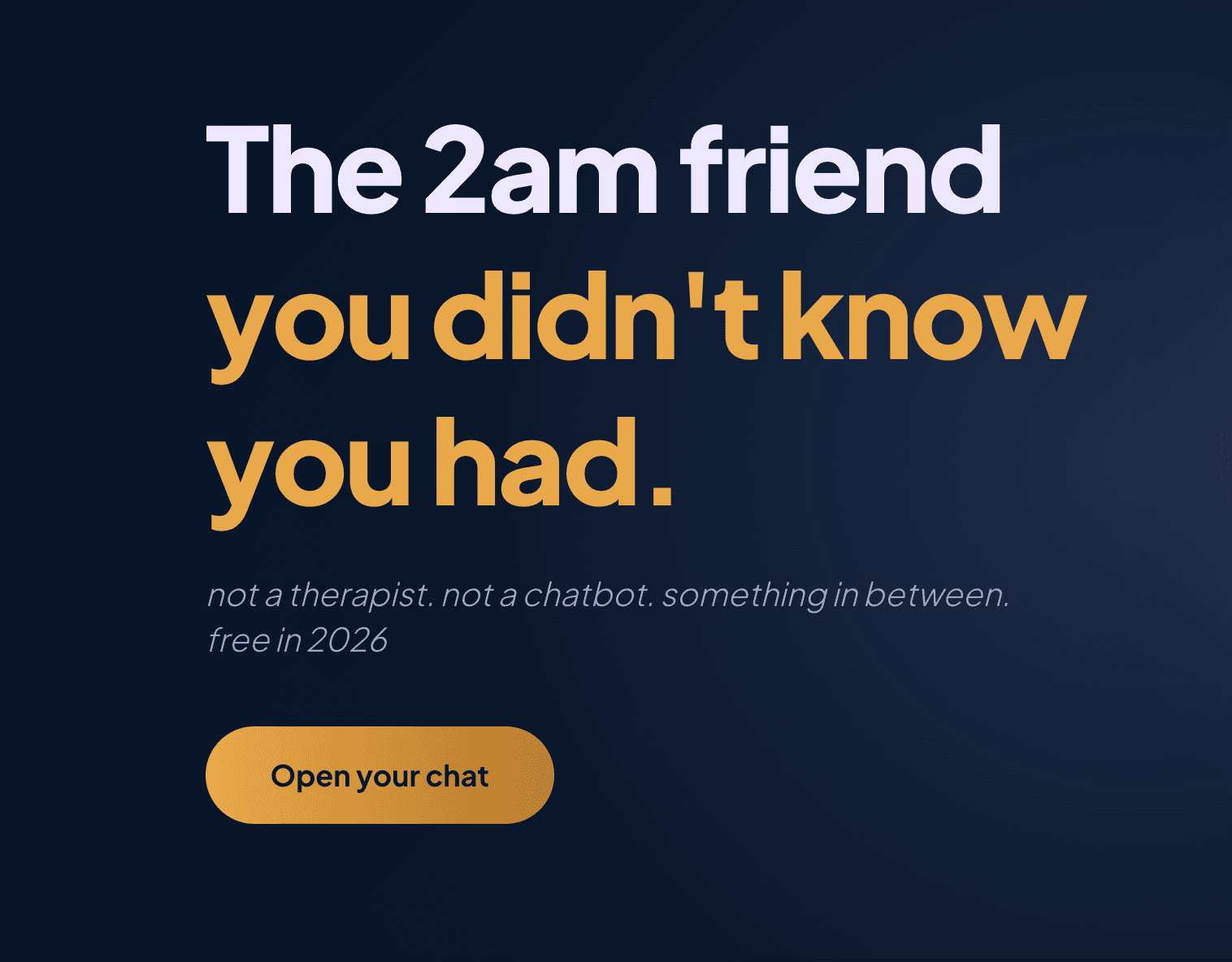
Don't just ask if someone's okay. Ask twice. The second question is the one that opens the door.
03
krucbl.co · AI diagnostic for ideas
krucbl
A diagnostic that asks the hard questions early — so you stop spending time on the wrong things and start betting on what actually has a chance.
For most of my career, anytime I was handed a job description, I rewrote it. Not out of ego — well, maybe a little — but because I knew I'd get better results working in a way that fit how my brain operates. I've always cared more about outcomes than process.
Over the years I built a personal system: a set of questions I'd run every idea through before sharing it with anyone. An internal BS filter that saved me from chasing dead ends. In 2023 I turned it into a scrappy little AI app, just for me. Ugly. Functional. But it worked.
Because here's what I kept seeing: smart, capable people spending enormous energy on ideas going nowhere — not because the ideas were bad, but because nobody had ever helped them pressure-test them properly.
That became krucbl.
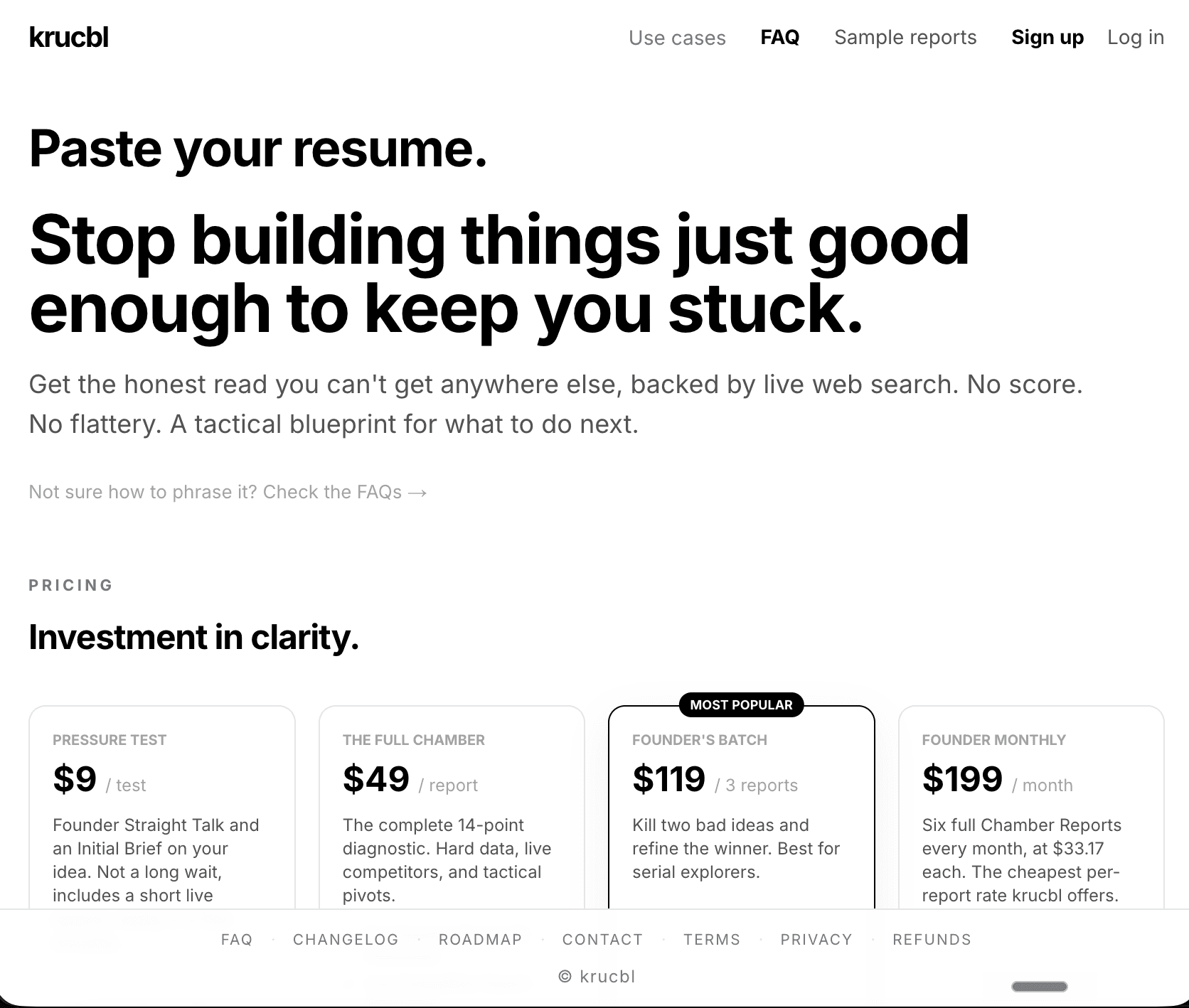
I'm genuinely proud of this one.
Try it freeRun the Pressure Test →A stripped-down krucbl. Paste an idea, get four honest things back.04
fairtimeto.com · Team time zones, with empathy
fairtimeto
A fair time to meet — for everyone on the call. Not just the ones in a convenient time zone.
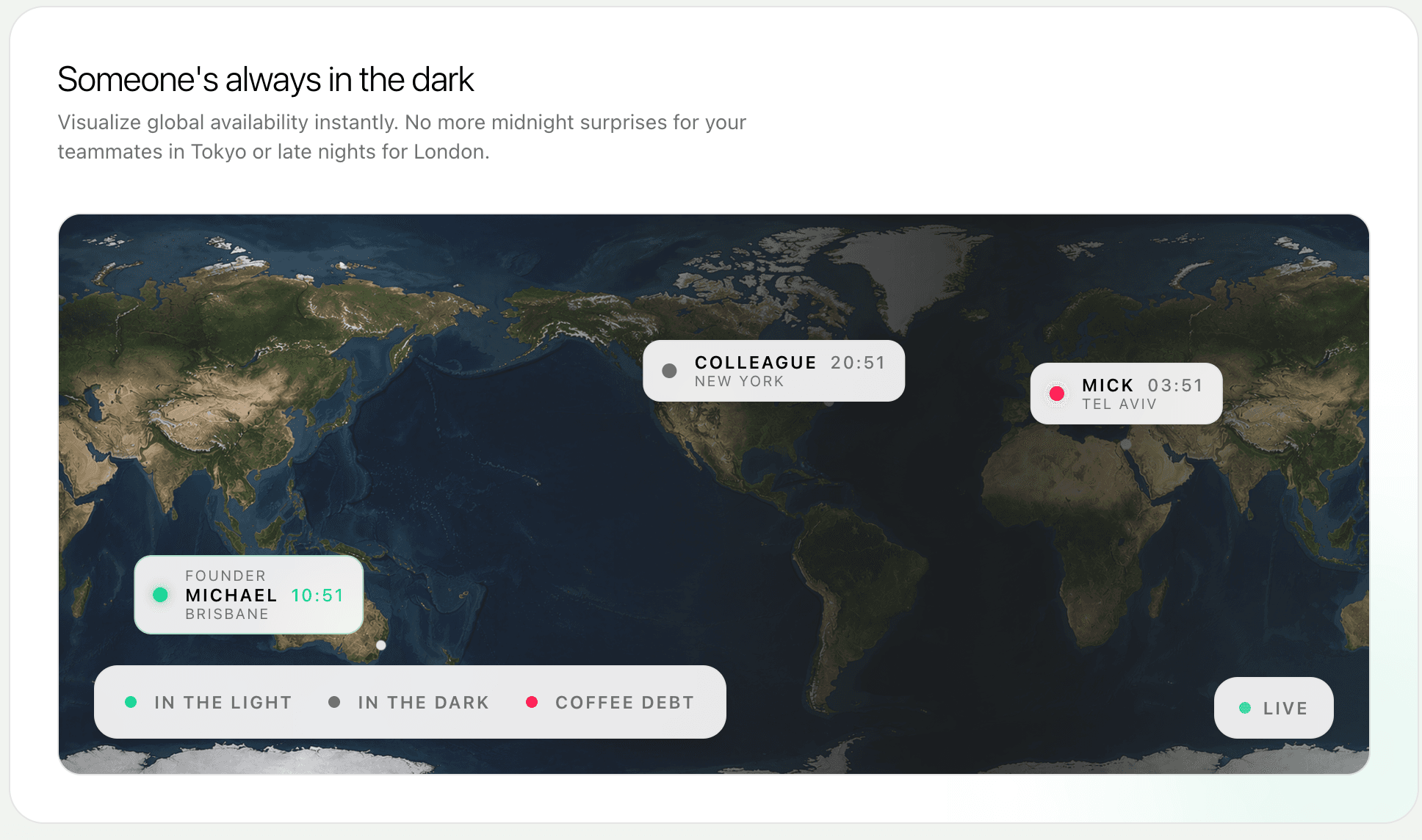
When I moved back to Australia, I thought the hardest part would be the jet lag. It wasn't. The hardest part was what happened after — when I kept working on everyone else's schedule.
I was still working with teams in Europe and North America. So I aligned my hours to theirs. My circadian rhythm collapsed. My physical health deteriorated fast. And the mental health fallout from that period is what eventually pushed me to build rurlyok — the "are you really okay?" product you've already seen on this page.
But there was another question underneath it: why is nobody helping us think about whose cost we're talking about?
Every time zone tool I found — World Time Zone Buddy, every calendar integration, every scheduler — helped you align the clock. None of them had an empathy layer. None of them said: "Someone on this call is taking a genuinely terrible slot. Here's who."
fairtimeto is built for the era we're actually living in — where remote and distributed work is the default, not the exception. It doesn't just find overlap. It surfaces whose time is being sacrificed so a team can make that decision with full visibility, not buried in a calendar invite.
I keep evolving it. Because the problem keeps evolving too.